
What is the Average Cost of a 2BHK or 3BHK Flat in Bangalore 2025?

Bangalore’s real estate story has always been a fascinating one, but what is the average cost of a 2BHK or 3BHK flat in Bangalore 2025? As we step deeper into this transformative year, homebuyers and investors alike are keenly observing the shifts. Whether you’re eyeing a cozy 2BHK or a spacious 3BHK, understanding the current pricing trends will help you make smarter, more informed decisions. Let’s dive deep into the market dynamics shaping Bangalore’s real estate landscape in 2025.
Bangalore’s Evolving Real Estate Market
Bangalore, often called the Silicon Valley of India, has been experiencing an unstoppable real estate boom for the past two decades. From tech giants expanding their campuses to startups fueling new employment hubs, the demand for residential spaces has only grown stronger. In 2025, this momentum has reached a pivotal stage. A combination of rapid infrastructure upgrades, economic growth, and lifestyle aspirations is defining this year as crucial for both buyers and investors. Prices are evolving, buyer behavior is shifting, and opportunities are ripe — but navigating this dynamic market demands a clear understanding of where things stand today.
Current Average Prices for 2BHK and 3BHK Flats in Bangalore (2025 Overview)
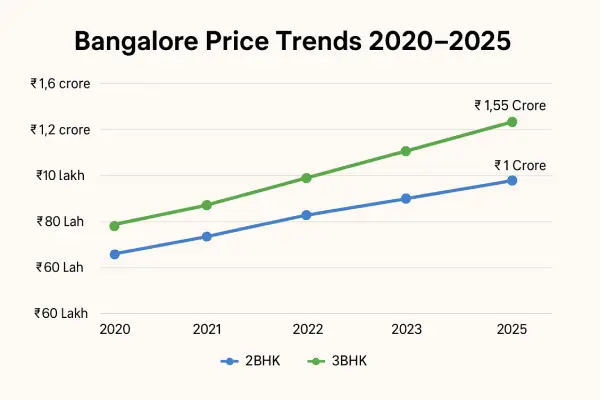
The big question — what is the average cost of a 2BHK or 3BHK flat in Bangalore 2025? — can be answered with a close look at the city’s latest numbers.
- Average cost of 2BHK flats: ₹85 lakh to ₹1.15 crore depending on the location, amenities, and project status.
- Average cost of 3BHK flats: ₹1.25 crore to ₹1.85 crore, with prime areas stretching even higher.
Compared to 2024, there’s an approximate 7% to 10% price increase across most micro-markets, fueled by rising land prices, material costs, and heightened demand from both end-users and investors. The gap between 2BHK and 3BHK prices has widened slightly, largely due to growing family preferences for more spacious homes.
Analyzing Supply and Demand Dynamics
Bangalore’s unstoppable urbanization plays a major role in shaping supply and demand curves.
- Population Growth and Urbanization: With Bangalore’s population projected to cross 14 million by 2026, the need for new homes continues to surge.
- New Residential Projects: Developers are responding with a flurry of new launches across North, East, and Peripheral Bangalore, with major developments such as Godrej MSR City and Godrej Woodscapes. Yet, supply still struggles to match demand in key hotspots.
- Shift in Buyer Preferences: A noticeable trend is the increasing inclination toward 3BHK flats over 2BHKs, especially among young families and working professionals who seek more space for hybrid work arrangements.
The interplay between constrained supply in established areas and robust demand for lifestyle upgrades is keeping prices buoyant.
Area-wise Breakdown of Flat Prices in Bangalore (2025)
Here’s a closer look at how different zones in Bangalore are performing in 2025:
- North Bangalore (Shettigere, Hebbal, Devanahalli, Yelahanka): ₹6,800 to ₹10,500 per sq. ft.
- East Bangalore (Whitefield, Sarjapur Road): ₹7,200 to ₹11,000 per sq. ft.
- South Bangalore (JP Nagar, Kanakapura Road): ₹6,500 to ₹9,800 per sq. ft.
- West Bangalore (Rajajinagar, Yeshwanthpur, Magadi Road): ₹7,000 to ₹10,000 per sq. ft.
- Central Bangalore (MG Road, Richmond Town): ₹15,000 to ₹22,000 per sq. ft.
Emerging neighborhoods such as Shettigere, Hennur, and Sarjapur Extension are witnessing significant appreciation, offering buyers a sweet spot between affordability and future growth. Meanwhile, suburban regions like Hoskote and Nelamangala present options under ₹5,000 per sq. ft., ideal for long-term investors.
Key Factors Influencing Apartment Prices in Bangalore 2025
Multiple drivers are shaping the property rates this year:
- Metro Expansions: Phase 2 of the Bangalore Metro and progress on Phase 3 are dramatically enhancing accessibility, boosting real estate prospects in many new corridors.
- Tech Parks and SEZs: Expansion of IT parks in Whitefield, Bellandur, Hebbal, and North Bangalore fuels housing demand nearby.
- Land and Construction Costs: Escalating costs for land procurement and raw materials have a direct impact on overall project pricing.
- Homebuyer and NRI Trends: Rising disposable incomes and increasing NRI interest (especially from the U.S. and Middle East) are pumping fresh capital into the city’s realty scene.
- Government Policies: RERA regulations continue to ensure transparency, but regulatory costs add to developers’ expenses.
- Technological Advancements: Innovations in construction like precast technologies are reshaping timelines but are also adding slight premiums for projects embracing modern methods.
New Launch vs Ready-to-Move-in Flats – What Costs More?
The debate between new launches and ready-to-move-in properties continues in 2025:
- Price Gap Analysis: On average, new launches are 8-12% cheaper than ready-to-move-in homes.
- Pros for New Launch Buyers: Attractive pre-launch offers, flexible payment schedules, and a wider choice of units.
- Pros for Ready-to-Move-in Buyers: Immediate possession, zero GST, and no construction-related uncertainties.
Smart buyers in 2025 are weighing both options carefully, often prioritizing builder credibility and location over price alone.
Expert Predictions: Will Apartment Prices in Bangalore Rise Further After 2025?
Real estate experts forecast a steady upward trend beyond 2025.
- Forecasts: Price growth of 6% to 9% annually over the next three years is anticipated, especially in tech-driven corridors.
- Infrastructure Impact: Completion of Metro Phase 2B and major expressways like the Peripheral Ring Road will push up values along their routes.
- Advice for Buyers: For 2BHK buyers, the window to secure affordable homes in strategic locations is now. 3BHK buyers might still find value in emerging belts but should act before the next surge.
Tips for Homebuyers: How to Get the Best Deal in 2025
To navigate Bangalore’s buzzing real estate market wisely, keep these tips in mind:
- Negotiate Smartly: Always negotiate for early bird offers, free interiors, or parking spaces instead of upfront price cuts.
- Choose the Right Builder: Choose trusted brands such as Godrej Properties and Birla Estates, known for their strong track records and fully RERA-compliant projects.
- Pick Strategic Locations: Proximity to metro lines, tech parks, and educational hubs ensures stronger appreciation.
- Focus on Pre-launches: Pre-launch and under-construction properties often offer maximum upside for early buyers willing to wait.
Being a well-informed buyer in 2025 can give you a significant financial edge.
Conclusion
In summary, what is the average cost of a 2BHK or 3BHK flat in Bangalore 2025? The numbers clearly show that while prices are higher compared to last year, Bangalore’s real estate still presents tremendous value given its economic resilience and infrastructural evolution.
For homebuyers, 2025 offers a golden balance — a window where both good deals and strong future returns are attainable. The key is acting decisively, choosing the right property, and aligning investments with long-term goals.
FAQs
The average price of a 2BHK flat ranges from ₹85 lakh to ₹1.15 crore, depending on the locality and builder.
Localities such as Yelahanka, Kanakapura Road, and Shettigere offer relatively affordable 3BHK options under ₹1.5 crore.
Experts predict continued price growth post-2025, especially in metro-connected and employment-driven corridors.
Yes, under-construction projects can offer lower entry prices, flexible payment terms, and potential appreciation upon completion.
First-time buyers should ideally plan for a budget between ₹90 lakh and ₹1.5 crore to access quality 2BHK or 3BHK options in promising locations.
Bangalore remains more affordable than Mumbai but is catching up to Delhi-NCR and Hyderabad in terms of price growth and investment appeal.